
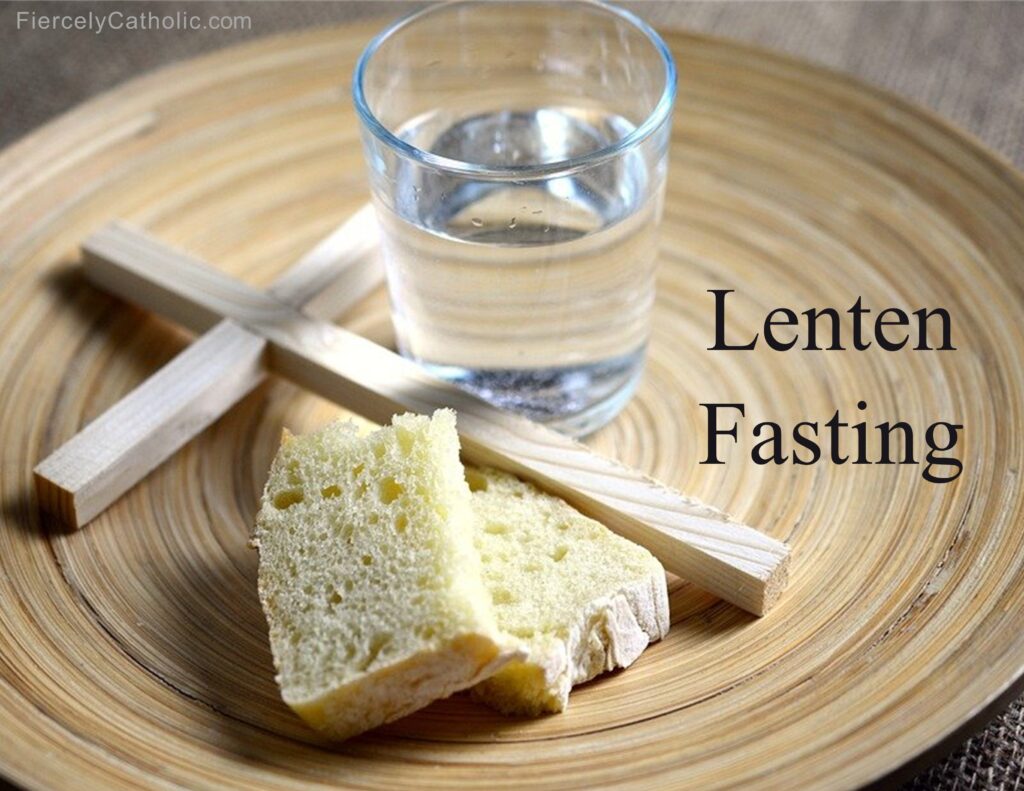
Jesus fasted and He taught his disciples to fast, not merely to eat less food but to experience an interior conversion. Christian spiritual fasting, particularly during Lent, should be focus on turning away from sin and turning toward God.
On Ash Wednesday and Good Friday, Catholics are required to eat no more than one full meal and two smaller meals that do not add up to a full meal. Snacking between meals should also be eliminated.
Catholics often also give up a particular item, habit, or comfort for the duration of Lent, depriving themselves of something good so they can focus more on the greater good.
Along with prayer and almsgiving, the practice of fasting is a pillar of the season of Lent.
Catholics are also encouraged to fast, make sacrifices, and perform other penitential practices throughout the year.
Loving the way that God intends:
Offering our hunger as a prayer to God:
A deeper meaning behind fasting:
“When you fast, do not look gloomy like the hypocrites. They neglect their appearance, so that they may appear to others to be fasting. Amen, I say to you, they have received their reward. But when you fast, anoint your head and wash your face so that you may not appear to others to be fasting, except to your Father who is hidden. And your Father who sees what is hidden will repay you.”
Matthew 6: 16-18
Fasting during Lent is not like making New Years Resolutions:
Recognizing what we have little control over:
The seasons and days of penance in the course of the liturgical year (Lent, and each Friday in memory of the death of the Lord) are intense moments of the Church’s penitential practice. These times are particularly appropriate for spiritual exercises, penitential liturgies, pilgrimages as signs of penance, voluntary self-denial such as fasting and almsgiving, and fraternal sharing (charitable and missionary works).
Catechism of the Catholic Church 1438
Not letting the appetite be in control:
More than just giving up food:
Saying “no” to say “yes” to greater things:
What is fasting and what is not fasting:
If Lent is a time for listening, fasting is a concrete way to prepare ourselves to receive the word of God. Abstaining from food is an ancient ascetic practice that is essential on the path of conversion. Precisely because it involves the body, fasting makes it easier to recognize what we “hunger” for and what we deem necessary for our sustenance. Moreover, it helps us to identify and order our “appetites,” keeping our hunger and thirst for justice alive and freeing us from complacency. Thus, it teaches us to pray and act responsibly towards our neighbor.
Pope Leo XIV, Message for Lent, 2026
The interesting history of Lenten fasting:
The Truth, Goodness, and Beauty of the Catholic Church
Jesus is closer than you realize:
Share this page with friends and family to start a conversation about your faith.
Don’t miss a post. Learn more about the Catholic Church and strengthen your Catholic faith.
Find more Fiercely Catholic video issues here.
Subscribe here.